
Silicosis claims: who qualifies and how to file
Silicosis caused by dust at work may let you claim in two ways: workers' comp, which follows the rules in your state, and a lawsuit against whoever made your equipment or the stone. A free review checks which ones fit your case.
Which claims fit you?
Then one question about your work comes up, and you're shown which claims may fit.
Workers' comp
Paid by your employer's insurance, even if nobody was at fault.
Choose your state to see where a workers' comp claim is filed. Or see every state
A lawsuit against the stone manufacturer
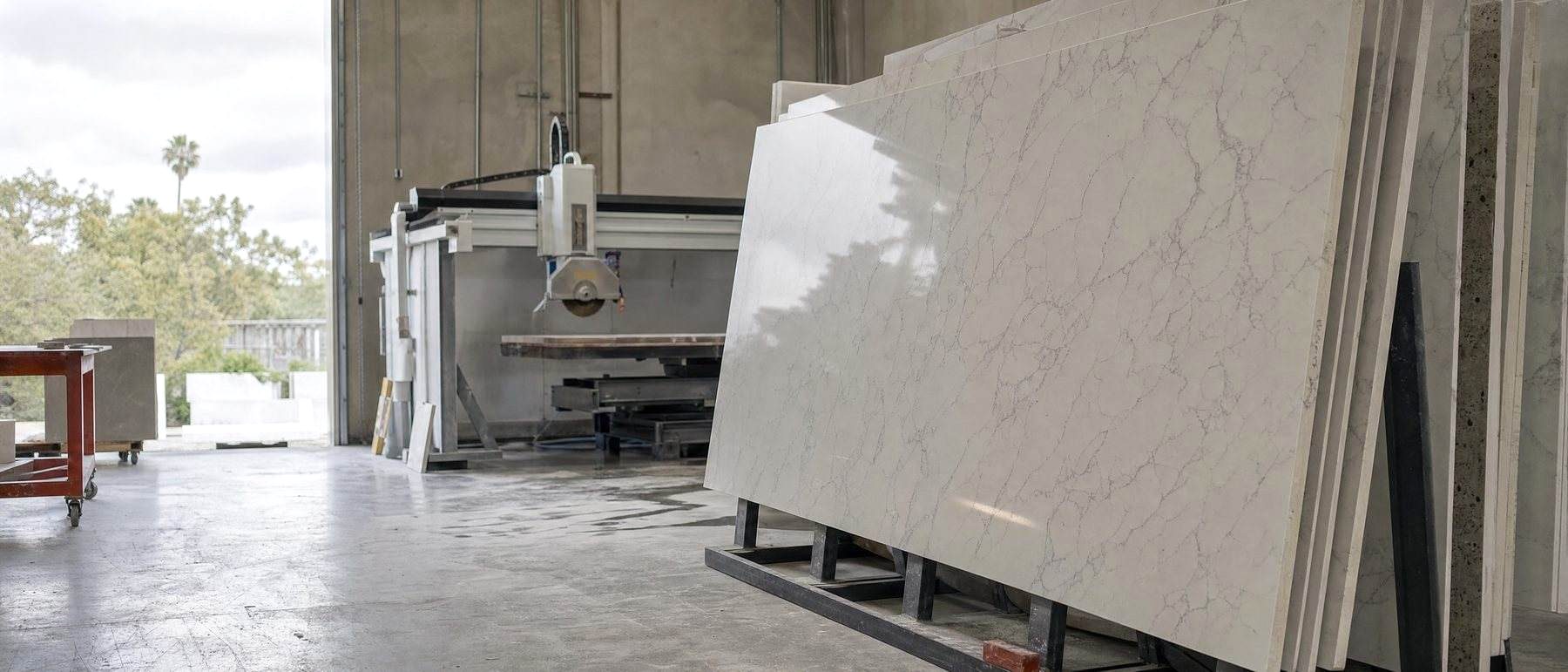
If you cut quartz or other engineered stone, the company that made the slabs can be sued for selling them without a real warning.
A Los Angeles jury found slab manufacturers at fault in August 2024 and awarded $52.4 million. A Denver jury did the same in April 2026, awarding $17.45 million.
Cambria, Caesarstone and Cosentino (Silestone) are all facing cases. See how each one is going.
If not, the more likely targets of a lawsuit are the makers of your equipment, of a blasting product or of the sand. Who can be named is checked during a free review. Read how silicosis lawsuits work
Your deadline and both routes get checked in a free review.
Free claim review by phone
Workers' comp or a lawsuit?
| Workers' comp | A lawsuit against the makers |
|---|---|
| Who pays | |
| The insurance company of your employer. | The businesses that made the stone or the equipment, or sold them. |
| Fault | |
| No one has to be proven at fault. | You prove they didn't warn you, or that what they sold wasn't safe. |
| What it can pay | |
| It can pay for medical care, part of the wages you lost, disability benefits, and death benefits your family gets. | Money in more forms than workers' comp offers, and the amounts are often far bigger. |
| A real figure | |
| Up to $10,000 in medical care is covered in California while the claim is being decided by your employer. | In August 2024, a Los Angeles jury gave a stone worker $52.4 million. A single jury made that award, and it isn't a typical amount. |
| Deadline | |
| Deadlines vary by state; California requires notice to your employer within 30 days. | Workers' comp deadlines don't control when you must file a lawsuit; that has its own date. |
Silicosis claims generally take one of two forms: workers' comp, paid through your employer's insurance, or a lawsuit naming the companies that sold the stone or didn't keep you safe. If a doctor says you have silicosis and your job exposed you to dust from stone, concrete, brick, or sand, you may be able to file both. Deadlines vary by state, and in California you can forfeit workers' comp if you wait more than 30 days to tell your employer about the illness. Call today for a free claim review in English or Spanish, since state deadlines make it important to act promptly.
Was your employer cited for silica dust?
Look up a company by name in the records kept by OSHA and state safety offices. When a citation is on file, it can help show your work had the dust.
44 employers cited since 2019 · 15 states in the records
Who can file a silicosis claim?
Usually, two groups are able to file:
- Any worker who breathed silica dust at work and later got a silicosis diagnosis, in any job, even one left years ago.
- When silicosis takes someone's life, a spouse, a child, or another qualifying relative can usually file a wrongful death case.
If you developed silicosis after exposure to silica dust at work, a free claim review is a good place to start. Silicosis means permanent scarring of the lungs from breathing very fine silica particles, and no cure exists today.
A silicosis diagnosis starts with your work history. Your doctor will ask about past dust exposure, rule out other causes, and use imaging to check your lungs (an X-ray or a CT scan), since the scan does a better job of revealing silicosis. That's why every dusty job on your record counts, even one you left years ago.
Call for a free review, and the attorneys who sponsor this page will go over your family's case with you in English or Spanish.
Jobs that fill the air with silica dust
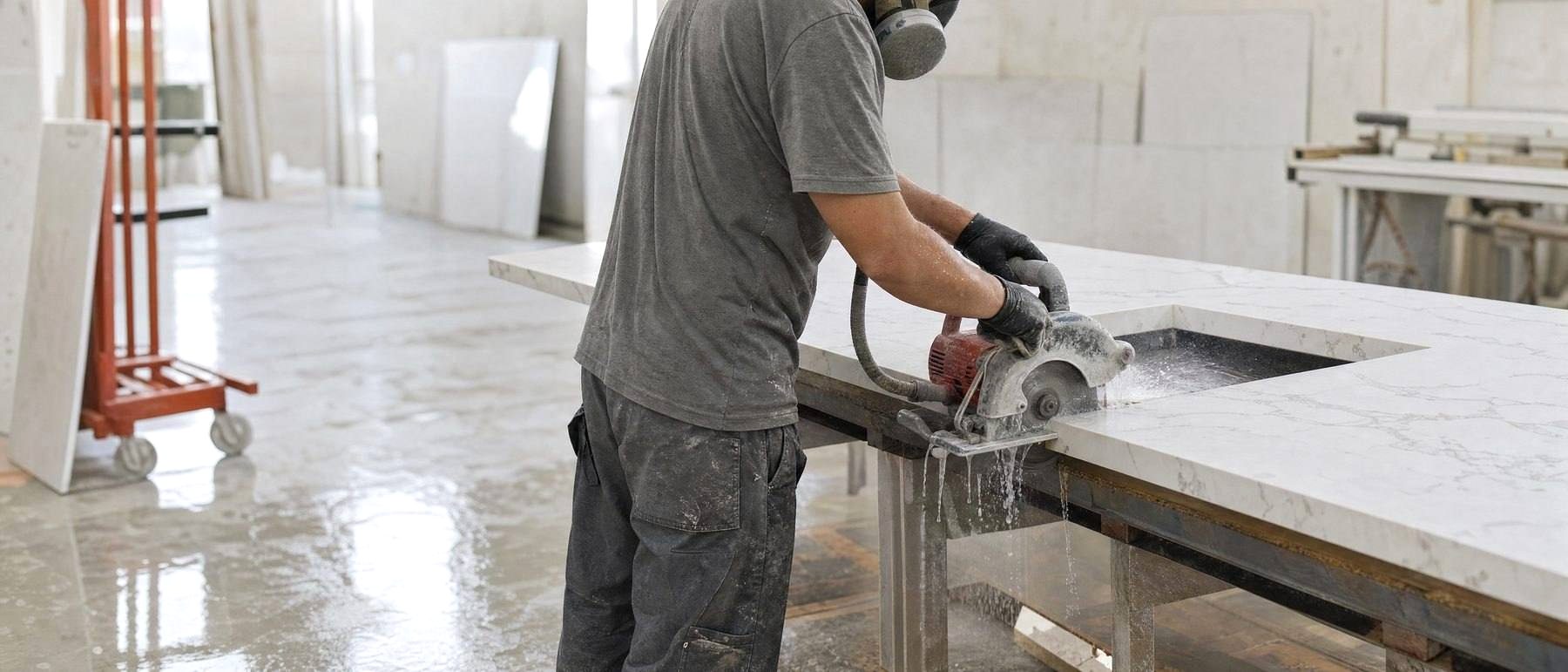
Cutting, sawing, grinding, drilling, or crushing stone, rock, concrete, brick, block, or mortar releases the dust. Silica particles can be more than 100 times finer than a grain of sand, meaning the dust you're breathing may be completely invisible. About 2.3 million U.S. workers are exposed to it on the job.
Where does it come from? Countertop stone shops, sandblasting, foundries, fracking with industrial sand, and any work that cuts, sands, or drills brick and concrete. Countertop work is a growing concern for health agencies. Engineered stone, the man-made slab sold as quartz, typically contains more than 90% silica. California documented the country's first 2 silicosis deaths among countertop workers in 2019.
Too much silica in the lungs is also tied to cancer, COPD, kidney failure, and certain autoimmune conditions in which the body's defenses turn on themselves. Silicosis also raises your chance of getting tuberculosis.
Types of silicosis and how soon symptoms appear
Watch for a cough, fatigue, trouble breathing, and chest pain. Timing depends on how heavy the dust was and how long you breathed it.
| Type | Amount of dust | How soon it shows up |
|---|---|---|
| Acute | Very high | Within weeks or months of exposure |
| Accelerated | High | 5 to 10 years later |
| Chronic (most common) | Lower, spread over time | After 10 years or more |
Chronic silicosis usually develops after 10 or more years of exposure to lower levels of silica dust, so work you did years ago matters too. Before your review, list each employer you've had and the years you worked for each one.
Suing while collecting workers' comp
Workers' comp is insurance your employer carries for illness caused by work. A lawsuit is a separate case, and it can ask for more kinds of money than workers' comp pays. Plenty of workers take both routes at the same time. The rules differ from state to state, so the free review looks at yours.
Who can a lawsuit name? Your employer, the company that made the stone, a distributor, or any other party that didn't warn or protect you. Apart from narrow exceptions, workers' comp rules in most states stop you from suing your own employer. Most claims argue that a company failed to warn about the dust, designed a defective product, or hid the hazard. Since August 2019, official records show 44 employers in 15 states cited over silica dust, 25 of them stone or countertop shops, so it is worth checking whether a past employer is on the list.
What a silicosis claim can pay
Workers' comp benefits follow set rules. In California, for example, it replaces wages while you can't work, pays permanent disability when a doctor says your limits are lifelong, and pays death benefits to your family. While your employer decides on the claim, you can also get up to $10,000 in medical care.
Lawsuits can bring in much larger amounts. One law firm's summary of past cases reports average settlement amounts ranging from $25,000 to more than $1,000,000, but those figures don't tell you what your claim is worth. In August 2024, a jury in Los Angeles awarded a stone worker $52.4 million and found a group of countertop manufacturers and one distributor responsible. No two cases are alike, so valuing yours takes a close look at your own facts.
Filing your claim: deadlines and steps
- As soon as you have the diagnosis, tell your employer in writing. In California the process starts with a form from your employer, and going past the 30-day window can mean losing your benefits.
- Gather your medical records, including scans and doctor's notes, since your claim depends on the diagnosis.
- List each job that exposed you to dust, with dates, so your exposure history is on paper.
- Note which state you worked in, since every state runs its own workers' comp system and state law sets the claim deadline.
- Submit the claim. Your state's agency receives the workers' comp claim, while a lawyer files a lawsuit in court after reviewing the products you used on the job.
- Call for a free claim review in English or Spanish. Your state sets a deadline for filing, and a quick call now helps make sure you don't miss it.
An attorney from one of the firms that advertise through Silicosis Claims will go over your claim with you by phone, at no charge.